 Albania
About the country
Albania
About the country
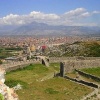
Gjirokastra is an Albanian town-museum known as a “stone town” or a “city of one thousand steps”. Situated in 120 kilometres from the capital of the country on a picturesque mountain slope over the Drin River Gjirokastra is an important town of the southern part of the country. Gjirokastra is located on the main highway of Albania which connects Tirana and Saranda. That’s why it is easy to get here by bus or by car. In 2005 the town was entered into the World Heritage List of UNESCO as a well-preserved town of Ottoman Empire ages.
In the 13th century the town developed violently but in 1417 after it was captured by Turks it declined gradually. In the 17th century Gjirokastra began to develop again due to appearance of the bazaar. Merchants who traded by silk, embroideries and white cheese went here. This bazaar is still famous at the present time, too.
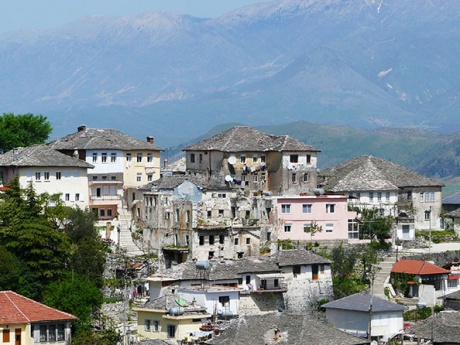
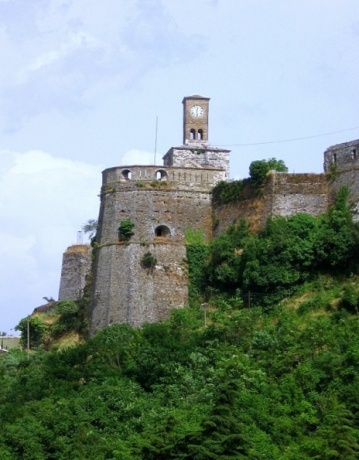
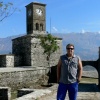
Having come to Albania to have rest and visited narrow streets of Gjirokastra tourists will feel that they are in the epoch of the Middle Ages: the houses and other buildings are constructed in medieval style. The very streets paved by stones and beautiful ancient buildings of tower type (Turkish kule) are the main sight of the town. Such buildings constructed in the 17th – 19th centuries were characteristic for the whole territory of Balkans. But they remained in good conditions only in Gjirokastra. A citadel of the 14th century overlooks the town. Nowadays there is the Museum of Arms there.
This town is the Motherland of the famous Albanian dictator of the communist period Enver Hoxha. There is Ethnographic Museum in the house where he grew up. Besides, a distinguished Albanian writer Ismail Kadare nominated to the Noble Prize for literature several times was born here.
It is also worth for tourists and travellers to visit located in the lower town the Turkish baths, Mekate Mosque, an old fortress, Museum of National Liberation Movement, Bazaar Mosque, ruins of Hadrianopolis (Sofratike district), Labova Church, Antigonea Archaeological Museum (village of Sarachinisht) and Museum of Arms where one can see a collection of weapons used by Albanians from the ancient times till the present days.
 Croatia
 Montenegro
 Slovenia